









Fifty years of connection between
the land, the family, and the future.
Roots in the mountains
Selva Negra is located at kilometer 140 of the Matagalpa–Jinotega highway, in the historic mountains where German immigrants established the first coffee plantations in the 19th century. Their descendants are the founders of Selva Negra, who still preserve centuries-old traditions and a deep connection to the land.
The hotel preserves valuable historical objects, such as the original railway wheel used to transport coffee from the plantations to the port of Corinto for export, as well as photographs documenting the arrival of the first settlers in Matagalpa.
A family and sustainable legacy
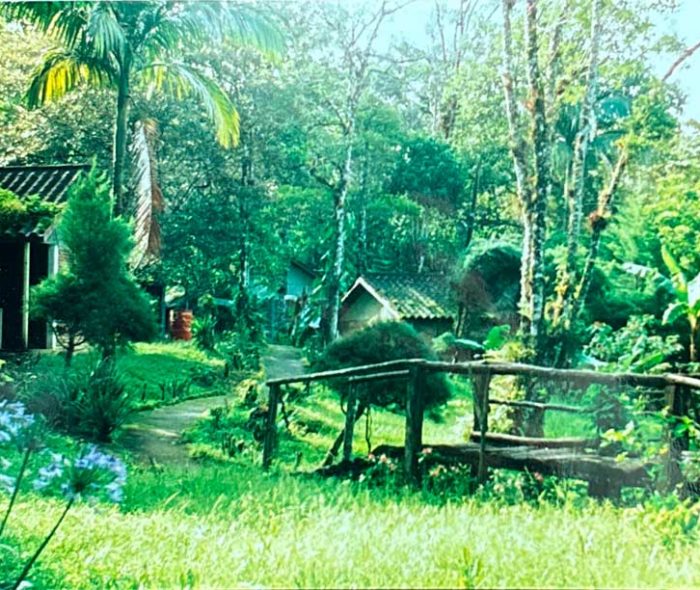
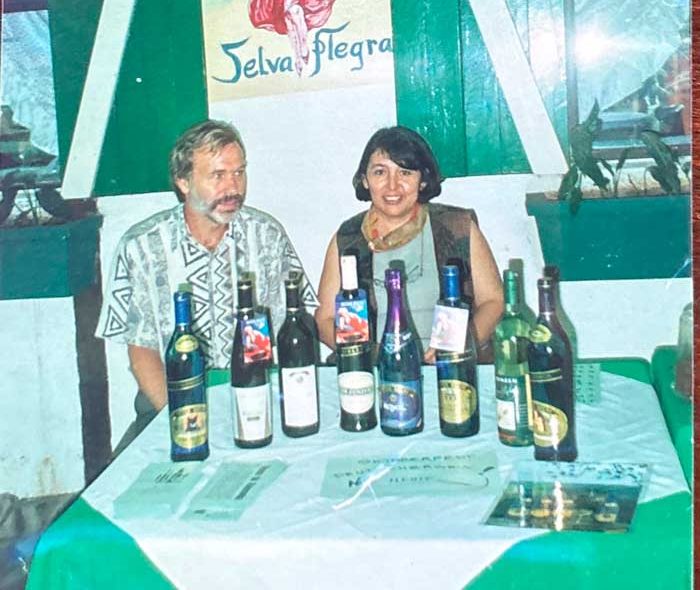
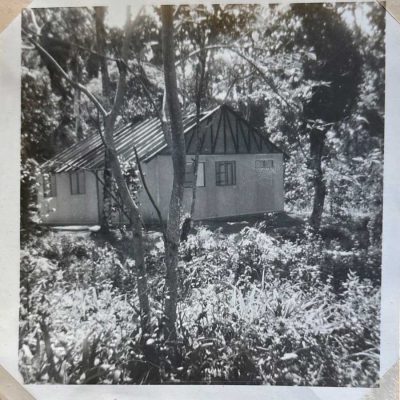
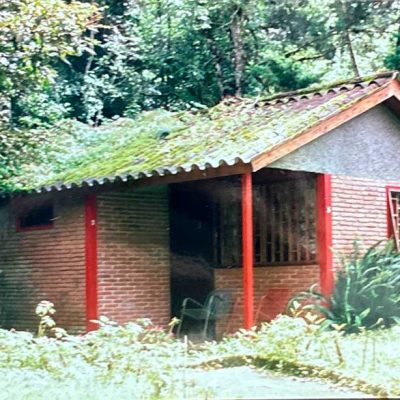
Selva Negra Ecolodge is part of Finca La Hammonia, a property acquired by Eddy Kühl and Mausi Hayn in 1975, when it was exclusively a coffee farm. That same year, they began building a small complex of cabins under the name Selva Negra, which over time evolved into the mountain hotel that today celebrates 50 years of history.
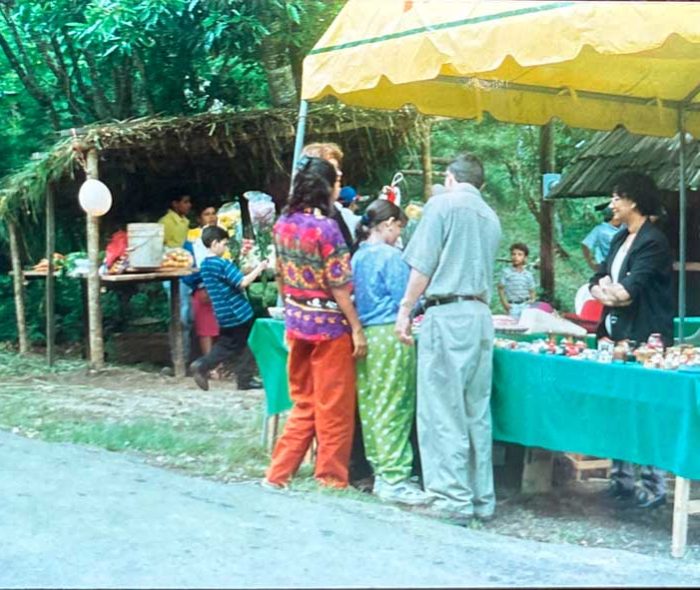
From the very beginning, the project has maintained a balance between sustainable agricultural production and responsible hospitality, integrating activities such as coffee production, meat production, dairy products (Gouda, Manchego, Camembert, Feta), fruits, vegetables, cured meats, and poultry, in harmony with nature and the people who live and work on the farm.
Over the years, Selva Negra has promoted pioneering environmental projects in Nicaragua, including ecological wastewater treatment, reforestation, biogas production, and the cultivation of beneficial microorganisms to regenerate the soil. Each initiative reaffirms its commitment to sustainability, innovation, and deep respect for the nature that gives it life.
Nature, community, and purpose
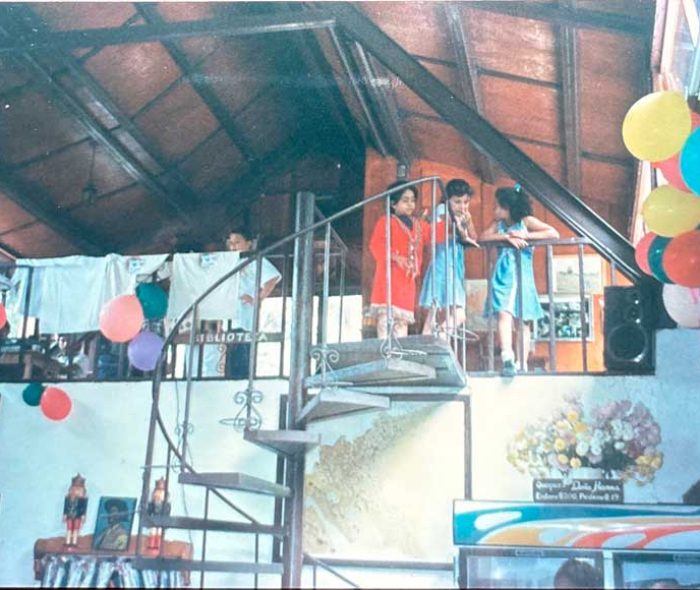
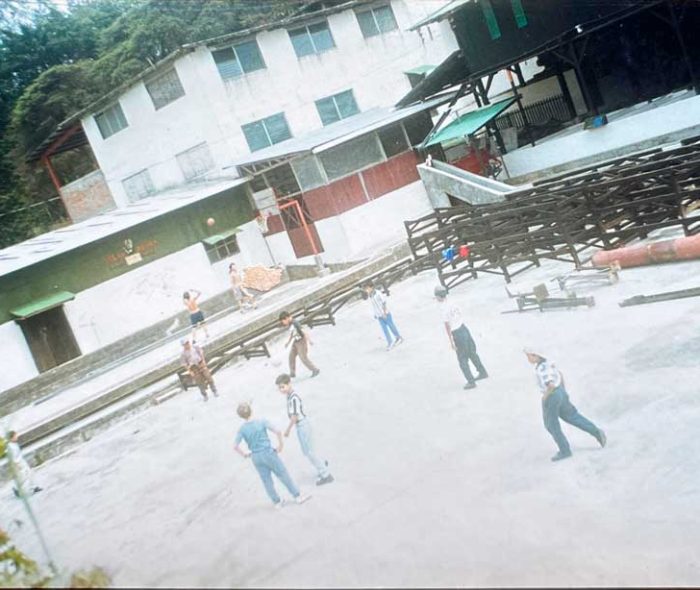
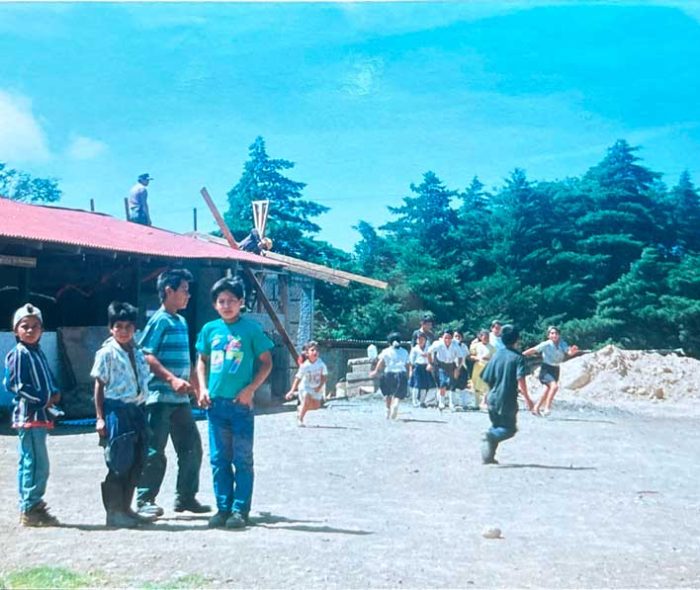
La historia del café de la hacienda La Hammonia se relaciona a la historia del café en Nicaragua en general. En los años 1880 el gobierno nicaragüense invitó a inmigrantes alemanes a venir y vivir en Nicaragua con un fin de promover el crecimiento de café. El abuelo de Eddy Kühl (Otto Kühl) y el bisabuelo de Mausi Hayn (Albert Vogl) estaban entre estos inmigrantes alemanes. Albert Vogl y Otto Kühl se establecieron en terrenos cerca de La Hammonia. Hans Bosche, quien vino a Nicaragua durante el mismo tiempo se estableció en el terreno que es ahora Selva Negra. La finca se llamó entonces y todavía se reconoce como La Hammonia, el latín para Hamburgo ciudad original de Hans Bosche. Bosche vivió en La Hammonia hasta 1956 cuando fue comprado por Reynaldo Rivera. En 1975 Mausi y Eddy compraron La Hammonia de su viuda en un intento de volver a las raíces de cafetaleros.
-
1890’s
Hans Bösche compra terreno
Hans Bösche, a German immigrant, buys the land on which he builds the La Hammonia estate and establishes it as a shaded coffee farm.
-
1956
La familia Boesche
The Boesche family sells the estate to Reynaldo Rivera.
-
1974
Mausi y Eddy Kühl
Mausi and Eddy Kühl buy the La Hammonia coffee estate from Reynaldo Rivera's family. At that time, there was no tourism in Selva Negra; the farm had been producing and exporting coffee since 1890. They purchased it with 47 manzanas of coffee, a large amount of pastureland, a few deteriorated workers’ houses, the Bosche cabin and the main house, a Pelton hydroelectric plant using water from the Bosche cabin lagoon, and the first cabin built, the two-story Old Otto.
-
1975
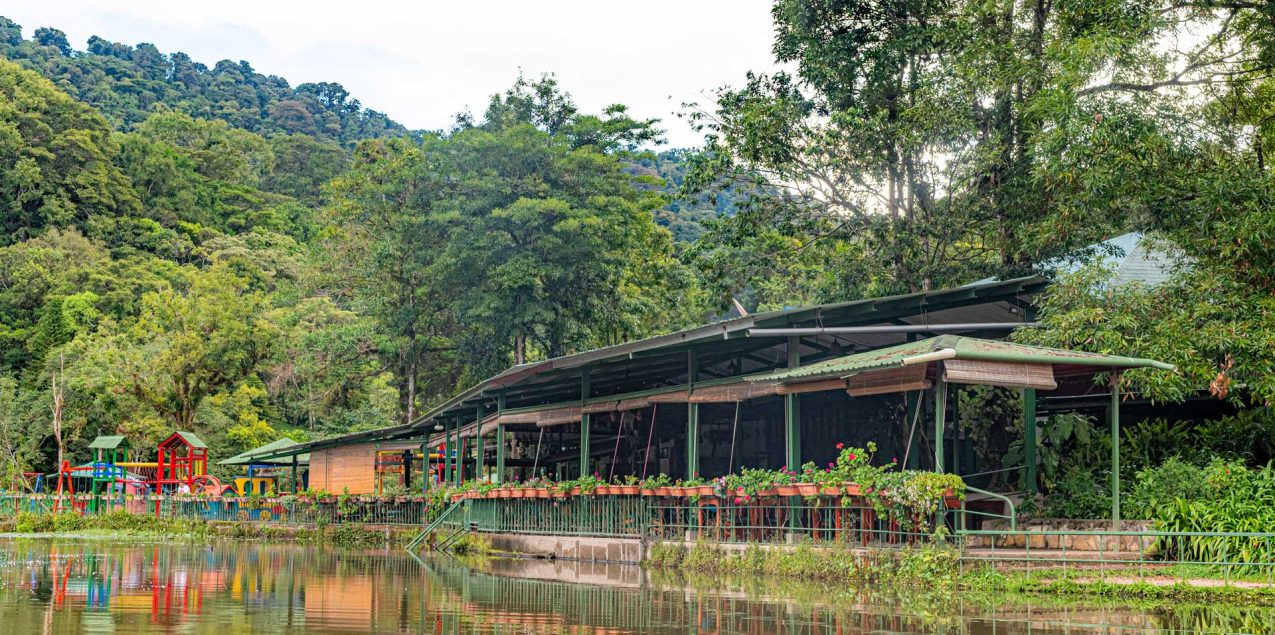
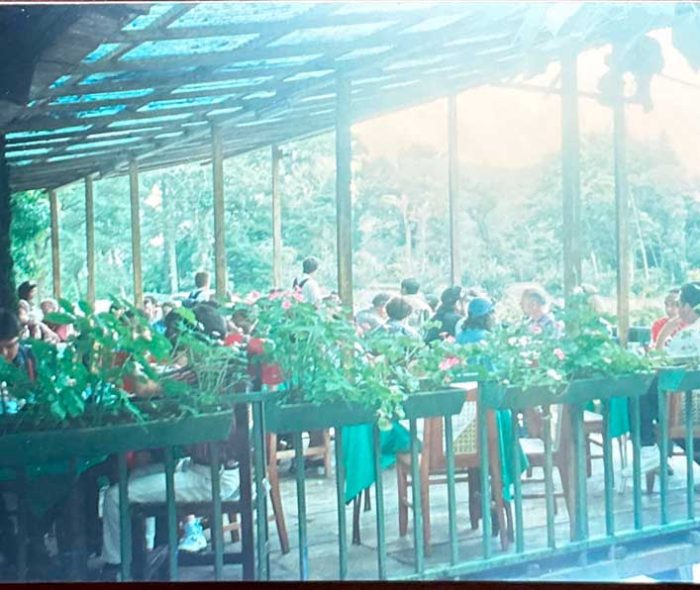
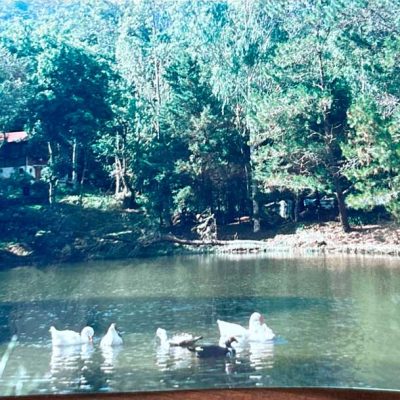
They converted the Bosche cabin into a restaurant. Doña Hanna, Mausi’s mother, bakes German cakes to serve in the restaurant. From that moment, the lagoon was created, which is now the restaurant’s lagoon. They also built the first cabins, which began operating as an eco-lodge. In addition, a school for the workers was constructed.
-
1976
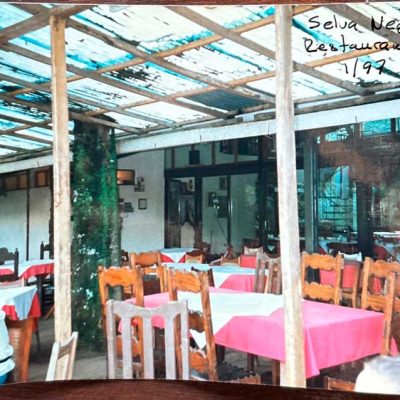
They proceeded to build the Selva Negra restaurant and the Bavaria conference hall.
-
1977
Lagoon rooms were built to provide lodging options.
-
1978
Eddy Kühl’s mother, Soledad, takes charge of daily operations on the farm along with her children Nora and Klaus.
-
1980
A baseball team is created and sponsored by the farm, with its field located in the area that is now the vegetable gardens with the plastic nurseries.
-
1989
Mausi and Eddy return to live and work on the farm and at Selva Negra. They build the first biodigester to treat the coffee pulp wastewater.
-
1990
Coffee pulp began to be used as an organic fertilizer.
-
1991
Replanting of coffee in abandoned areas. Construction of new houses for farm workers. They build the first cattle barn.
-
1992
More cabins are built for Selva Negra.
Fifty geese and one hundred ducks were imported for enjoyment at the hotel; the descendants of those geese still remain today. -
1993
Purchase of a few manzanas of land adjoining the lower part of the farm, with many fruit trees — La Finquita.
-
1994
Start of vermiculture—composting using worms—California redworms, Eisenia fetida, starting with 0.5 kg of worms.
First Sunday buffet offered at Selva Negra.
First Oktoberfest celebration at Selva Negra. -
1995
The farm tour begins, with Mausi taking guests around the farm in her vehicle.
Purchase of a San Carlos wet-processing machine, the first to arrive in Nicaragua.
Planting of the first cacao trees at La Finquita.
ECO OK certification for a sustainable farm and good social practices, later renamed Rainforest. -
1996
Dairy farming begins with Wilhelm Castro using intensive rotational grazing (intensive paddock system).
They make curd and use the milk for the kitchen staff and the restaurant.
Filtered water from the biodigester is used to irrigate the pastures.
The Selva Negra conference hall is built.
The name “Selva Negra” is registered as a gourmet coffee brand. -
1997
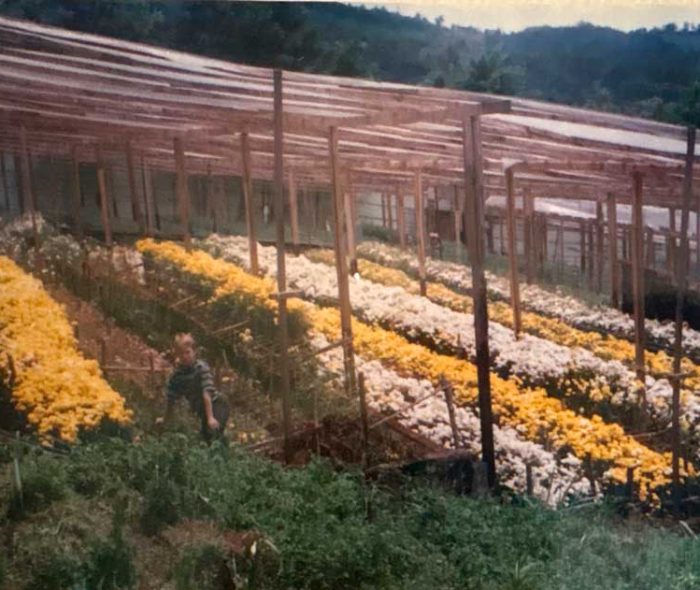
Cut flower production begins for decoration and sale to florists.
Victoria (daughter of Eddy and Mausi) and her husband Roy move to the farm to work on the cut flowers.
Egg production for the restaurant begins.
Initial experiments for organic weed and pest control start in a farm garage.
Hurricane Mitch destroys the flower nurseries, causes landslides on the land, and cuts off the road to Matagalpa. -
1998
Construction of the San Nicolás chapel at Selva Negra begins.
-
1999
Vermiculture expands significantly with the construction of a large area for the worms.
Quail farming begins for egg production for the restaurant.
Eddy Kühl’s first book, Matagalpa y sus gentes, is published.
The baseball field is moved to its current location. -
2000
Nurseries are built to expand the cut flower area and grow vegetables for use in the restaurant.
Cattle farming begins in Sebaco for use during the rainy season. -
2001
A vermiculture area is built where lombricompost is currently produced.
Yasica rooms are constructed at Selva Negra using solar water heaters. -
2002
The kiosk is built at Selva Negra.
Stables are constructed to start pig farming.
German experts arrive to teach how to make European-style cheese and sausages.
Cattle farming begins at El Bramadero, another farm owned by La Hammonia. -
2003
Electricity generation begins with a hydroelectric turbine, replacing the one installed in 1912 by Hans Bosche, which operated until 1999.
Production of European-style cheeses and sausages continues to grow.
The planted coffee area grows slowly, reaching 303 manzanas.
Francisco Kühl, a graduate of Zamorano University, begins working on the farm.
We purchase cacao trees to plant at El Bramadero, the farm toward La Dahlia. -
2004
Constantly renewing coffee lots.
Repairing workers’ houses.
Always using the biodigester during coffee harvest season to utilize methane gas in the kitchen for the staff. -
2006
We receive Biolatina certification for organic coffee from this date.
Construction of a new farm kitchen.
First La Hammonia Workers’ Fair to demonstrate how the farm operates.
Production of finished products from the farm’s raw materials grows, including jams, vinegars, dried herbs, and cacao. -
2007
Farm tours increase enough to hire our first permanent guide.
An internship program for university students begins, starting with students from Earth University.
The organic laboratory is inaugurated to expand the production of natural insecticides and fungicides.
Cut flower production is discontinued, and the nurseries are repurposed for vegetables.
Roy goes to study pastry at Le Cordon Bleu and graduates as a professional chef. -
2009
The coffee museum is inaugurated.
First experiments with oyster mushroom cultivation for consumption.
The current cheese factory is built.
Vegetables are sold by order to private customers.
Roy begins preparing European-style cakes for sale in the restaurant. -
2010
Bird Friendly certification received from this date.
Goat farming begins.
Purchase of land on the other side of the road—San Felipe, El Mirador. High-altitude coffee is planted.
LEO program is launched—with donations to support children’s education in Matagalpa with the help of a tutor. -
2011
First student graduate from Zamorano University in Honduras comes to do an internship.
-
2012
Mushroom production is established in an exclusive area.
First coffee-focused tour takes place during the harvest season. -
2013
Purchase of land in the lower area adjoining La Hammonia—beautiful land with coffee and large trees—we call it San Pancho.
-
2014
Construction of a new cattle barn in the lower part of the farm.
Planting of cacao trees at San Pancho farm. -
2015
Construction of a new dry-processing facility—
purchase of 2 cage dryers of 200 qq each, 3 terraces in the dry-processing facility,
tunnels for coffee drying,
3 sun-drying patios for coffee.
Remodeling of the organic laboratory and student rooms behind the lab.
Planting of coffee in the upper part of the farm.
Purchase of a dump truck for the farm. -
2017
Signage is installed on the coffee seedling areas of the farm.
Gabions are placed in the runoff areas of the farm.
Coffee is exported directly from the farm, carrying out the entire process on-site—from seed to export or local roasting and sale. -
2018
Order of 1,500 vanilla plants, planted among the citrus trees at La Hammonia and the other farms—Río Grande and Bramadero.
Purchase of 2 coffee dryers of 80 qq and 100 qq. -
2019
Terrace number 4 in the dry-processing facility.
Purchase of a second Pelton turbine further downstream to provide electricity to the hotel’s cold storage room. -
2020
Remodeling of the two-story camp with better-designed drawers and Bamboo windows. Bamboo for construction is purchased from Louis and planted in San Felipe.
-
2021
Remodeling of Elvin Ramos’ house on the farm.
Remodeling of 5 rooms with drawers and bunk beds.
Vanilla harvest begins, along with learning the processing method.
Purchase of Penagos—wet coffee processing machine to use less water.
Planting of Geisha coffee variety in the upper parts of the farm. -
2022
Sale of farm products—vegetables, citrus, jams, coffee—grows.
Planting of bamboo variety for construction begins at El Mirador. -
2024
Learning of wild mountain mushrooms begins for use in the restaurant and to create controlled cultivation areas.
A second Penagos machine is purchased. -
2025
Collection of wild edible mushrooms begins for use in the restaurant and for the sale of dried mushrooms.
The coffee area grows to 380 manzanas, all under shade, half of it organic.
Planting of Laurina coffee variety—low in caffeine.